
Minor Eye Infections
Styes
A stye is a small, painful lump on the eyelid. They're common and should go away within a week. Styes are rarely a sign of anything serious but may be painful until they heal. 1
The skin around the stye may be swollen and red and the stye may be filled with yellow pus. The redness may be harder to see on brown and black skin. 1
Your eye may be red and watery, but your vision should not be affected. A stye usually only affects 1 eye, but it's possible to have more than 1 at a time and on both eyes. 1
There are two types of stye: external styes (the common type) and internal styes (which are quite uncommon)
2 .

External stye
This is the common type of stye. Technically it is an external stye; however, it is often just called a stye. It appears along the edge of the eyelid, due to infection in the eyelash follicle (where one of your eyelashes attaches to your eyelid).
It may start off as a small red lump but, as it develops into a collection of pus (a little abscess), it looks like a yellow pus-filled spot. The edge of the eyelid around it becomes reddened and swollen, and the lid is painful.
Internal stye
An internal stye arises when oil glands in the main part of the eyelid (meibomian gland) become clogged with oil and then infected. The infection comes to a head on the inner surface of the eyelid, against the eyeball, so that from the outside it is visible only as a swelling.
Internal styes may be painful, although often they cause a dull aching in the eyelid, sometimes with the sensation of a lump. Internal styes are much less common than external styes.
How you can treat a stye yourself 1
To reduce swelling and help the stye heal:
- Soak a clean flannel in warm water.
- Hold it against your eye for 5 to 10 minutes.
- Repeat this 2 to 4 times a day.
To relieve the pain, take simple analgesia.
Medicated Treatment
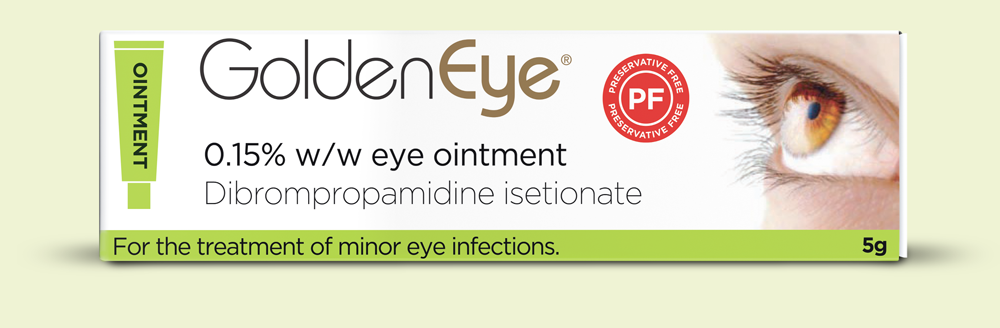
GoldenEye ® Ointment for the treatment of minor eye and eyelid infections such as styes in adults and children, can be purchased from your Pharmacy after you have spoken with your pharmacist.
Always read the label.
Ask your pharmacist for GoldenEye®.
Things you can do to treat and prevent styes.
1
Styes are often caused by bacteria infecting an eyelash follicle or eyelid gland. You can help prevent a stye by keeping your eyes clean.1
List of Services
-
DoList Item 1
Wash your face and remove eye make-up before bed.
Keep your eyelids and eyelashes clean, especially if you have blepharitis.
Wash your hands before putting contact lenses in or taking them out.
-
Don'tItem Link List Item 2
Do not share towels or flannels with someone who has a stye.
Do not rub your eyes if you have not recently washed your hands.
Wear contact lenses and eye make-up until the stye has burst and healed.
Do not try to burst a stye or remove an eyelash yourself. This can spread the infection.
Date of Prep: October 2025 Approval Code: GOL/25/04C